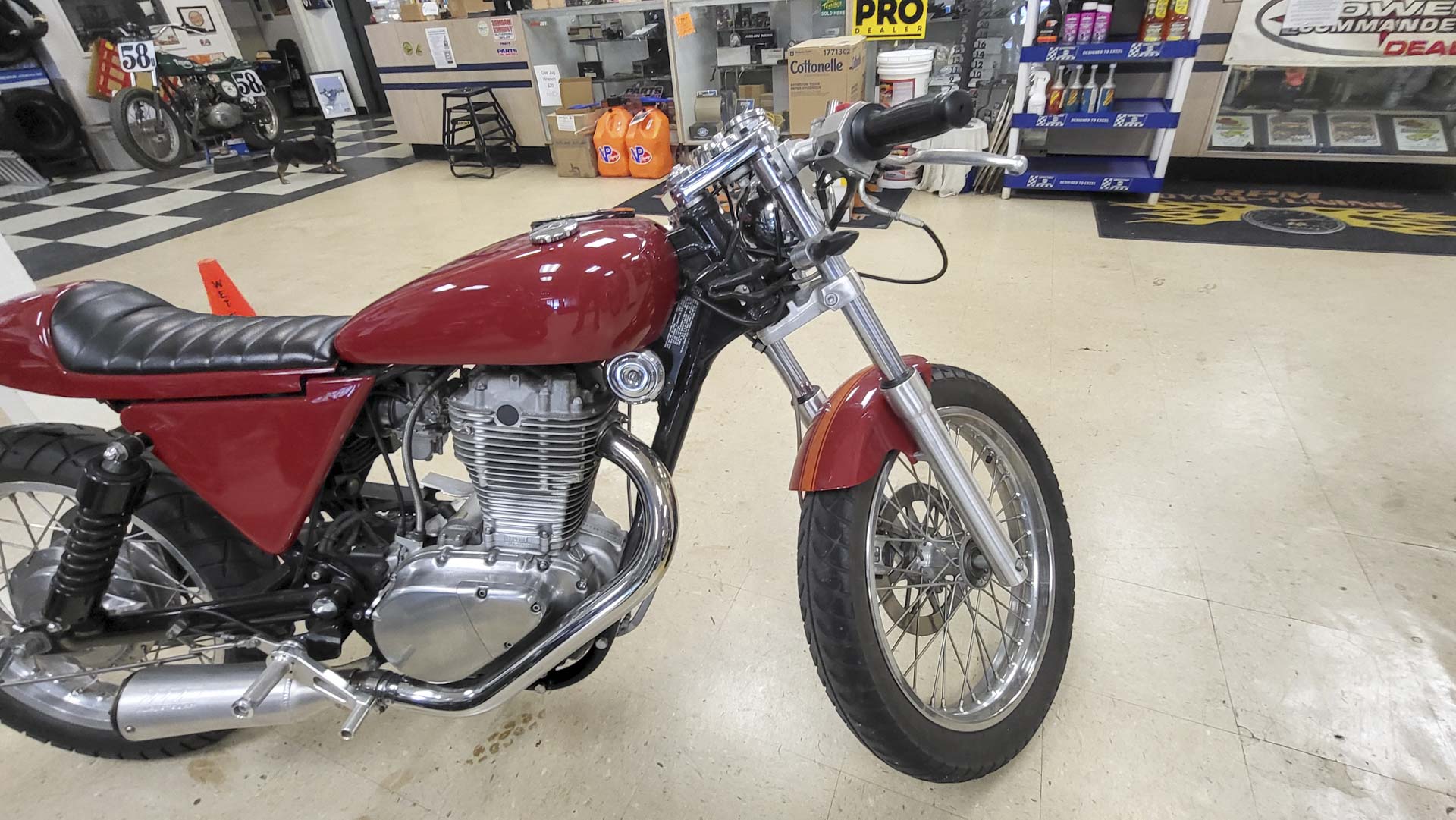
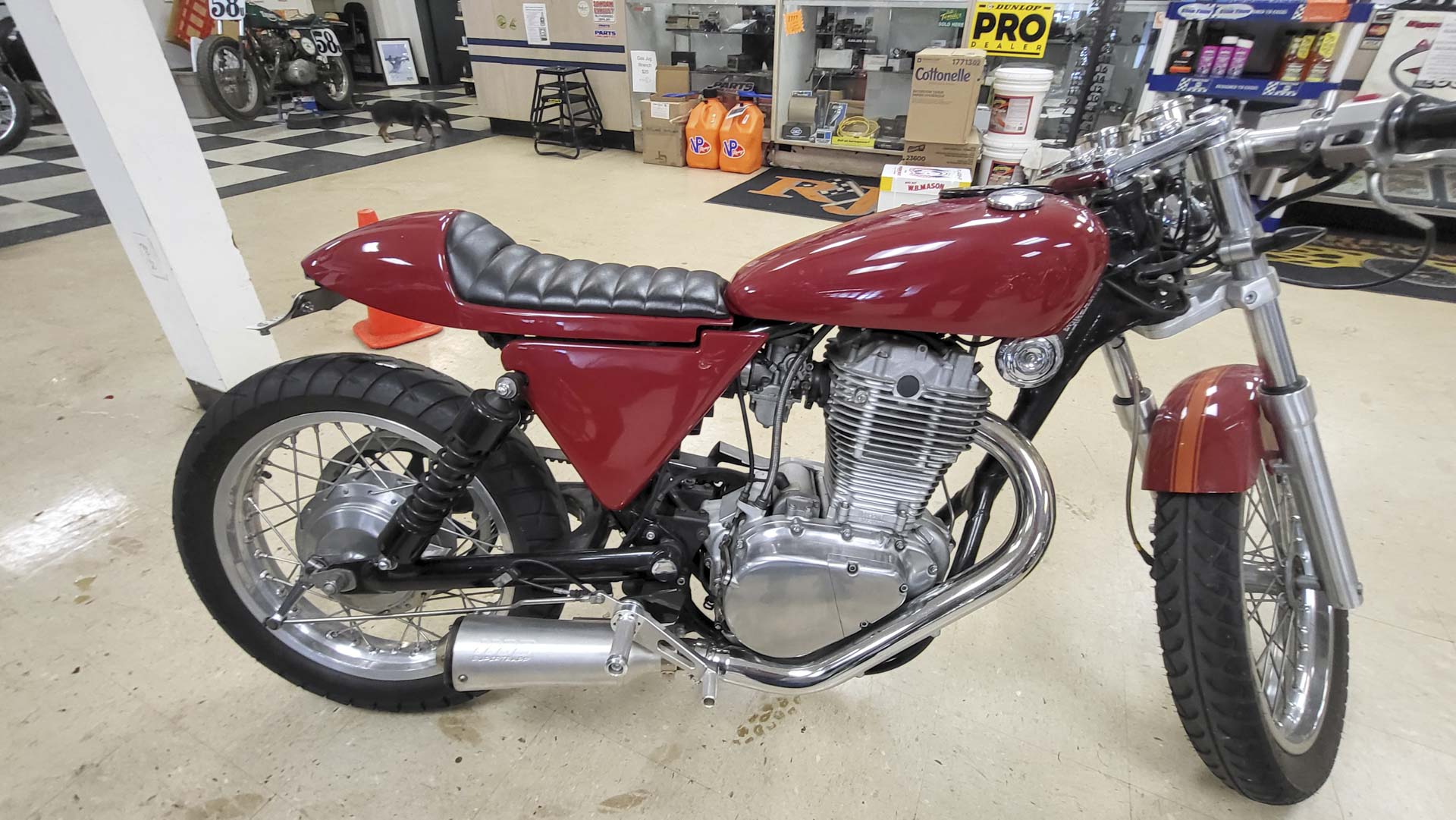
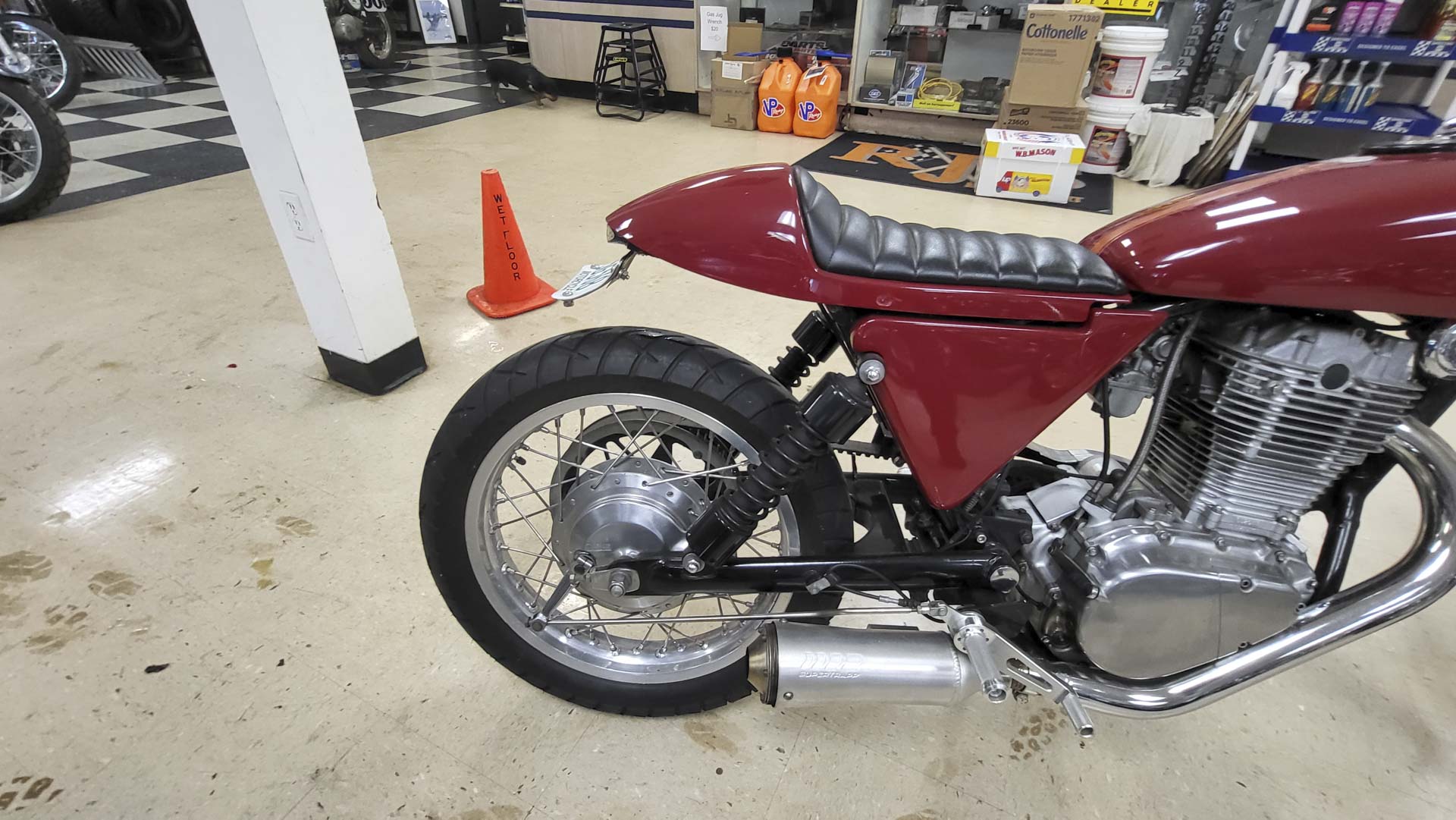
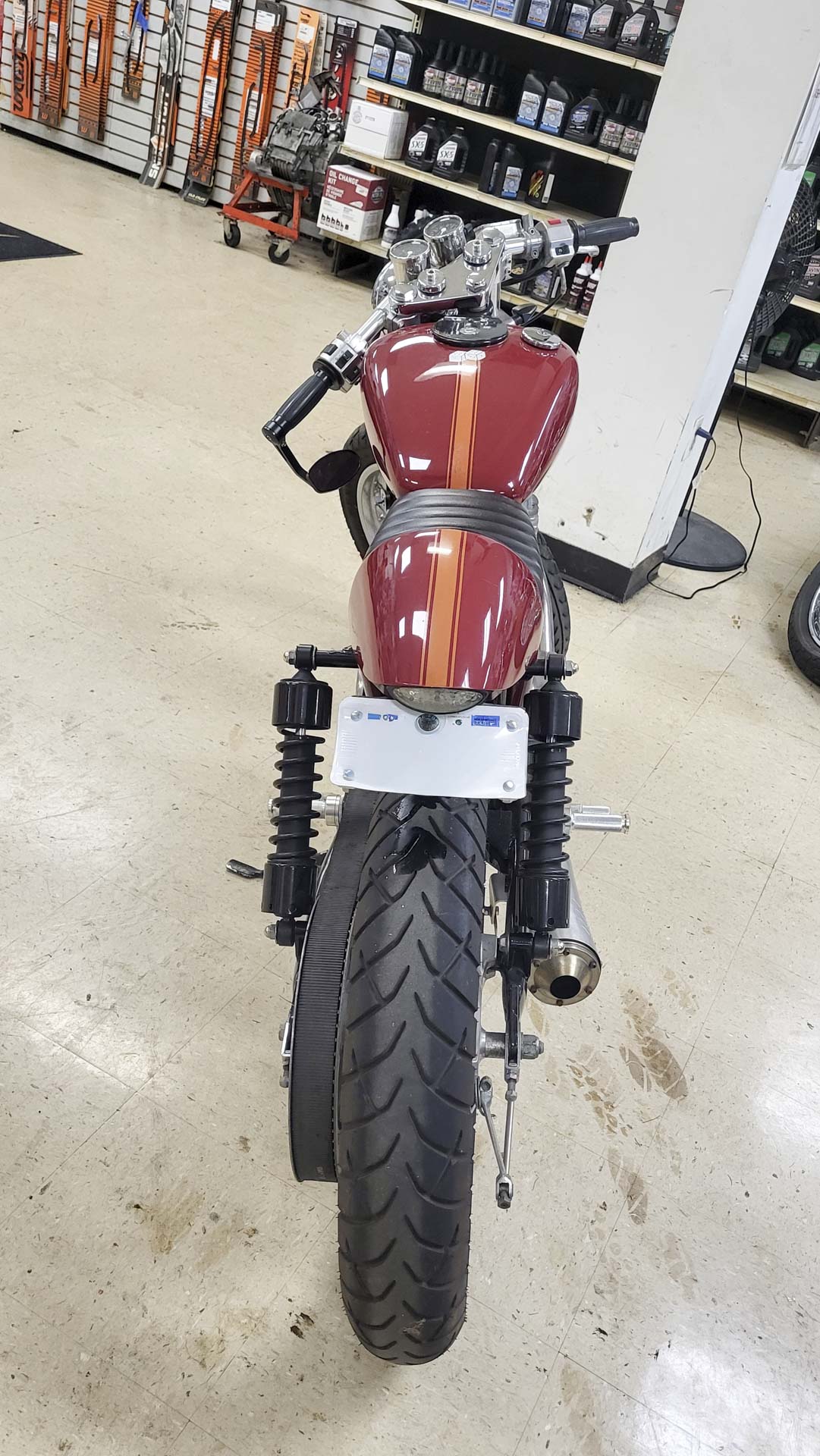
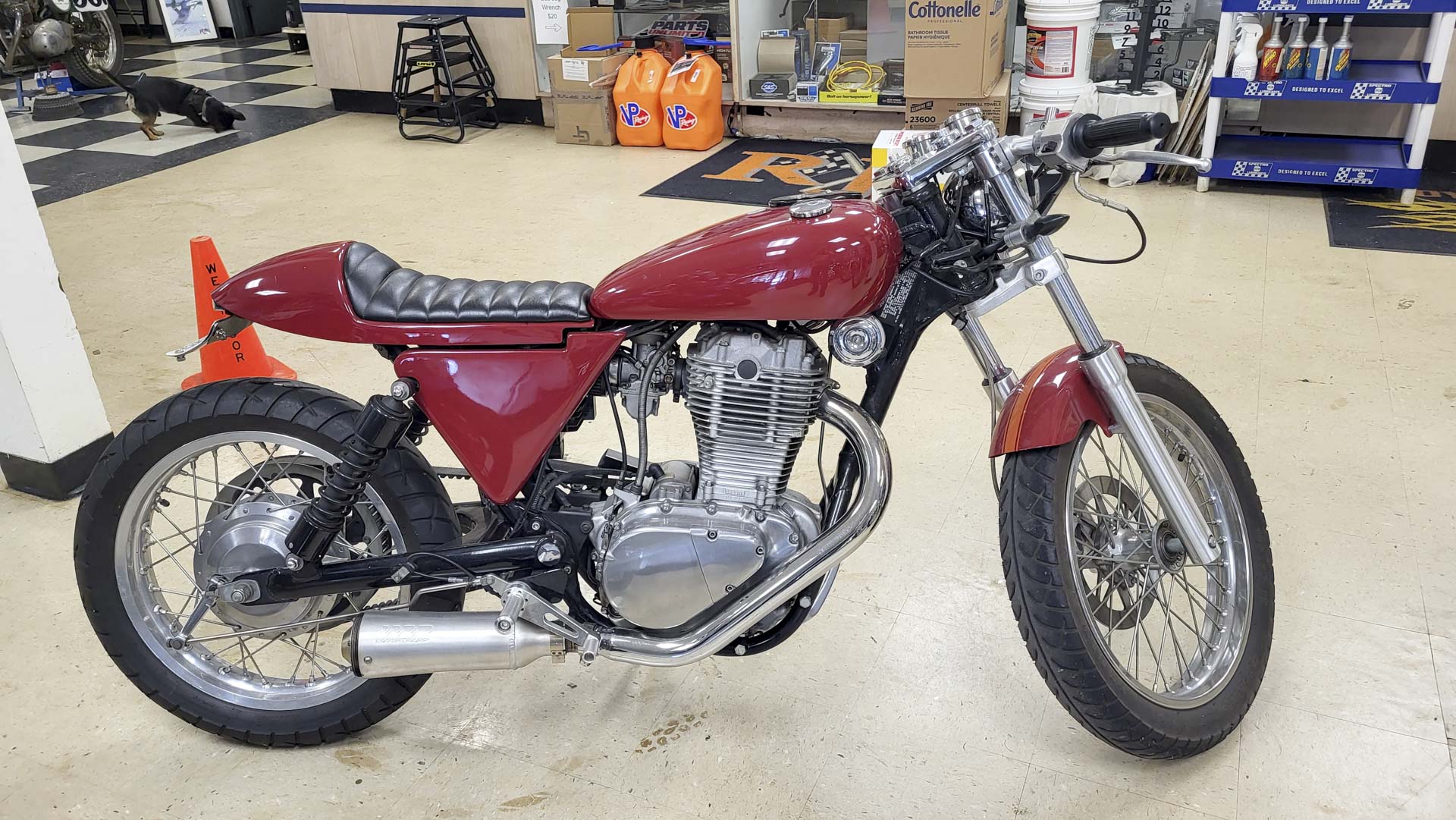
1997 Suzuki LS650 Custom Cafe Style
PRICE: $2,499
STOCK #: S00674
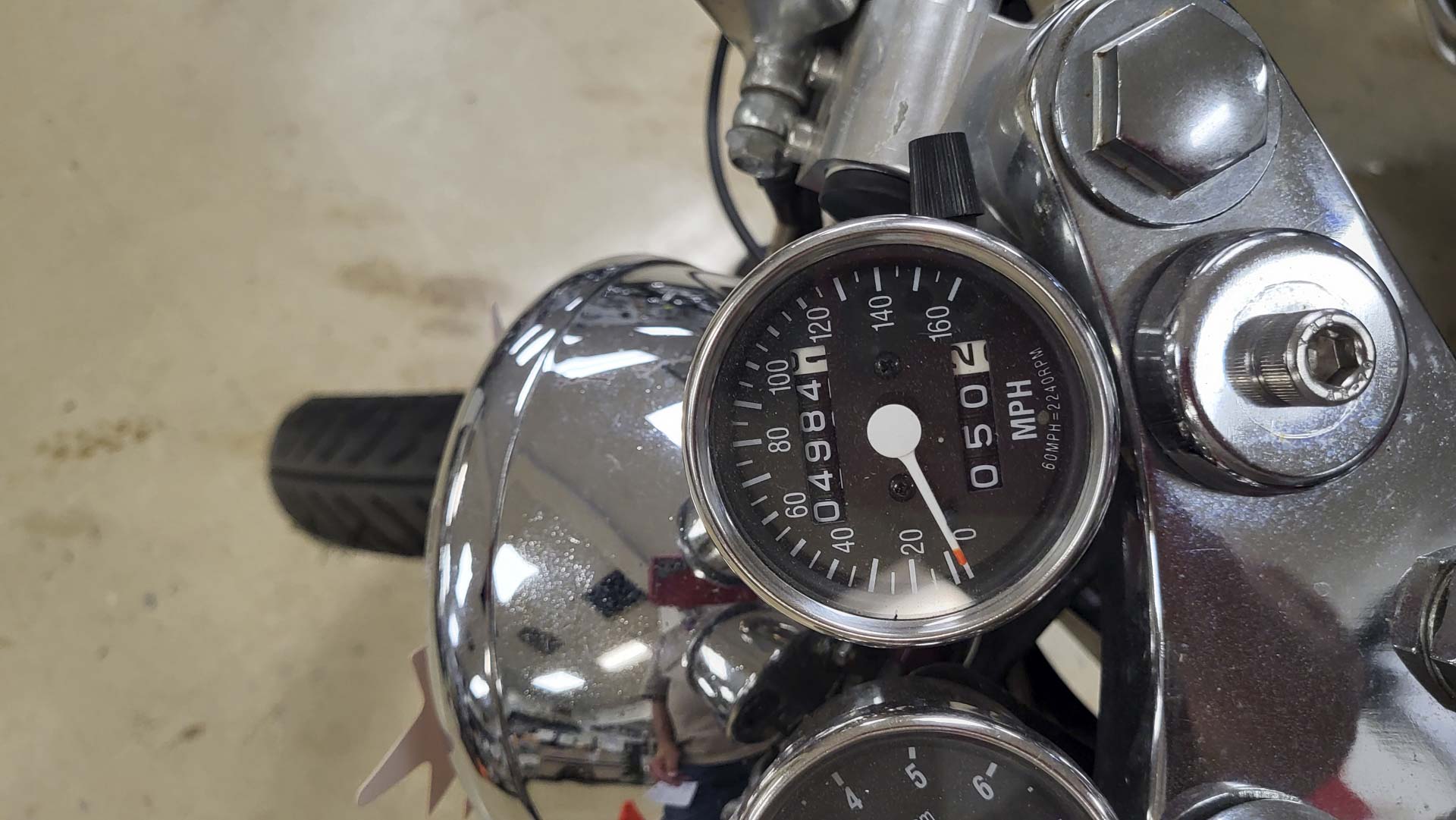
ODOMETER: (TMU) Total Mileage Unknown
BODY TYPE: MOTORCYCLE
CONDITION: Pre-Owned
Request Information About Inventory
Asterisk indicates Required Field
Info
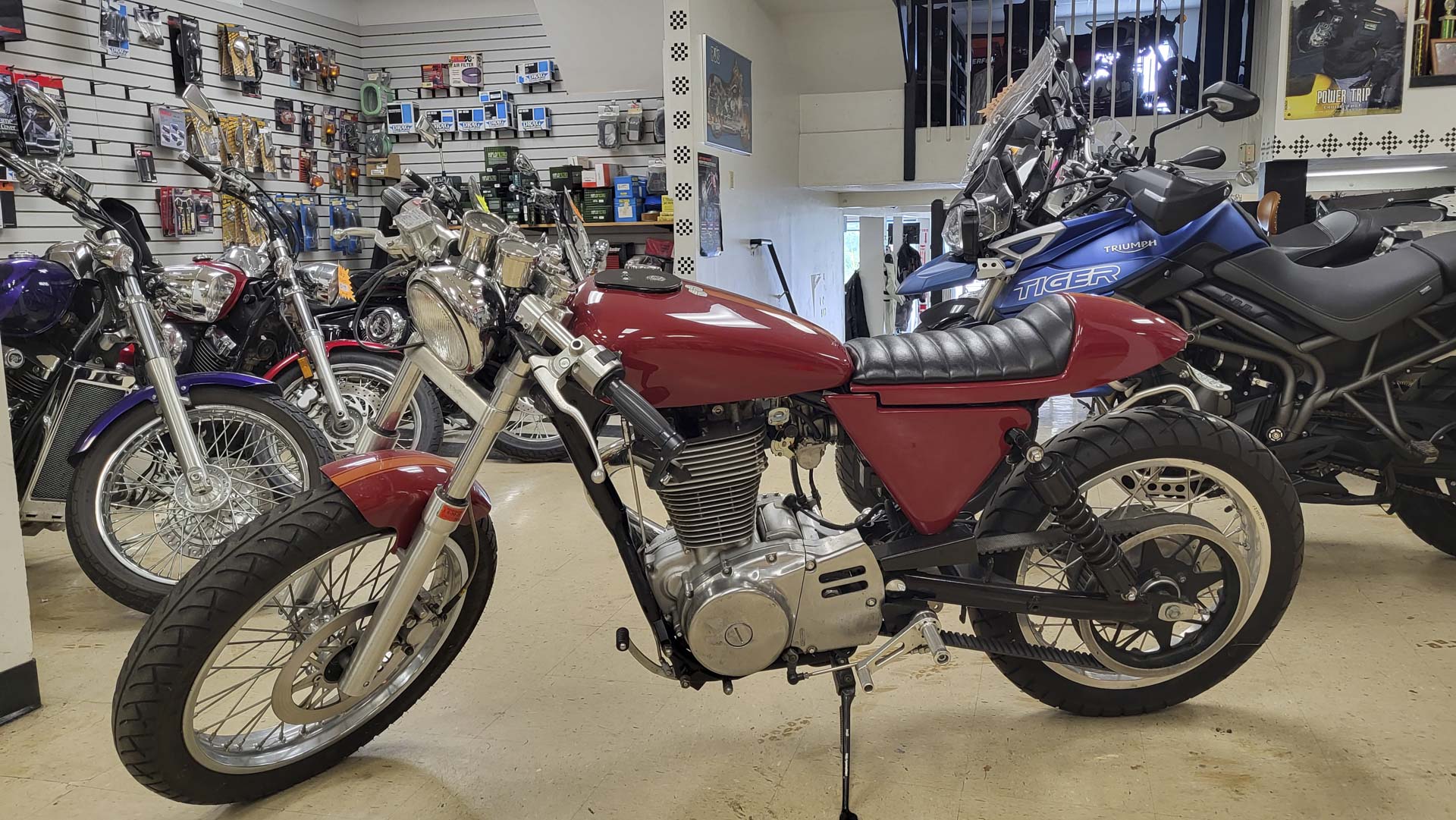
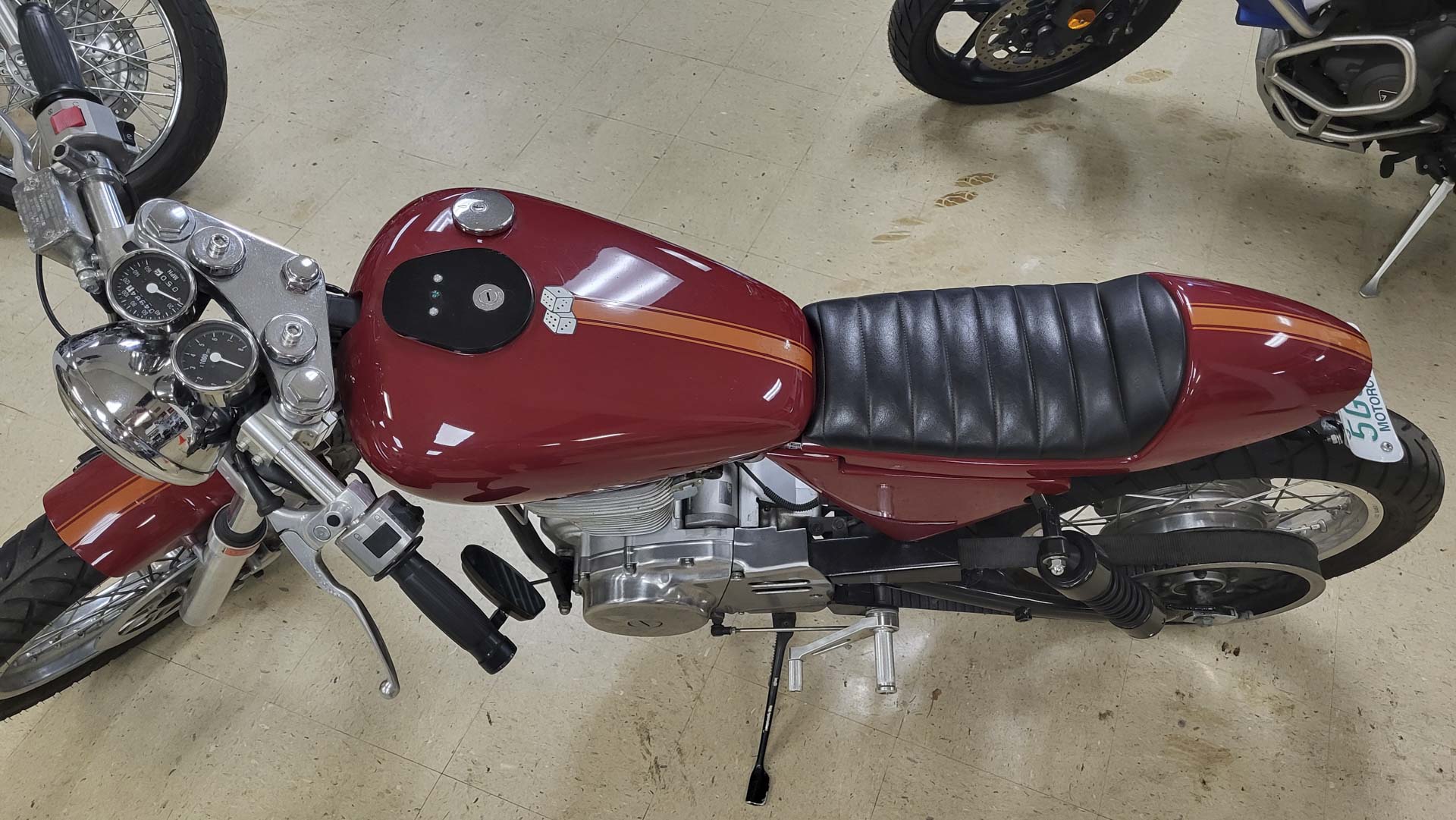
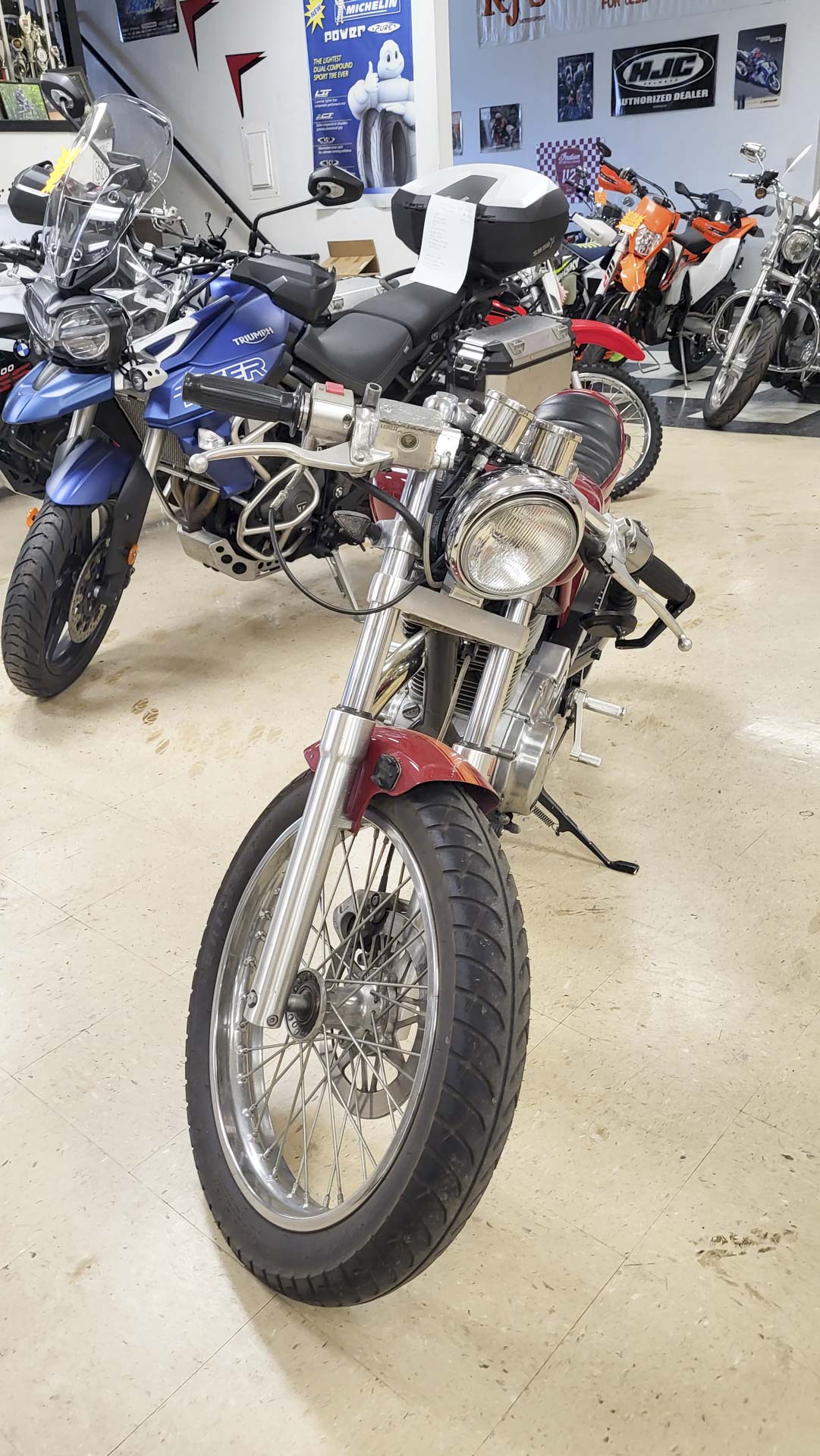
1997 Suzuki LS650 Custom Cafe Style
A 1997 Suzuki LS650 Savage modified into a custom Cafe Racer fundamentally pairs its stock, heavy-thumping "big single" powertrain with an aggressively redesigned, lightweight chassis. Because cafe racer conversions vary depending on the builder (or popular bolt-on kits like the RYCA CS-1 conversion), the definitive specifications are split below between the core factory mechanics and the standard custom modifications.
Engine & Transmission (Stock Foundation)
The LS650 engine remains the centerpiece of a cafe racer conversion due to its minimalistic aesthetic and low-end torque.
Engine Type: 652cc, 4-stroke, air-cooled, SOHC, 4-valve single cylinder ("Thumper").
• Bore x Stroke: 94.0 mm x 94.0 mm (square engine configuration).
• Compression Ratio: 8.5:1.
• Maximum Power: 31 horsepower (23.1 kW) @ 5,400 RPM.
• Maximum Torque: 36.9 lb-ft (50.0 Nm) @ 3,000 RPM.
• Fuel Delivery: Single 40mm Mikuni carburetor (often swapped for a Mikuni VM36 or fitted with pod filters in custom builds).
• Gearbox: 5-speed manual (Note: Some global market regional variants featured a 4-speed).
• Final Drive: Kevlar belt drive (frequently converted to chain-drive during wheel changes).
Custom Cafe Racer Modifications (Typical Specs)
Converting the LS650 from its original low-slung cruiser geometry to an athletic cafe racer requires distinct changes to its stance, ergonomics, and weight.
• Target Dry Weight: Estimated 295–310 lbs (Reduced significantly from the stock 352 lbs by discarding heavy chrome fenders, pullback bars, stock dual seat, and factory exhaust).
• Seat Height: Raised to 29.5–31 inches via a flat brat-style or fiberglass cowl-tail seat pan (Up from the ultra-low stock 26-inch cruiser seat height).
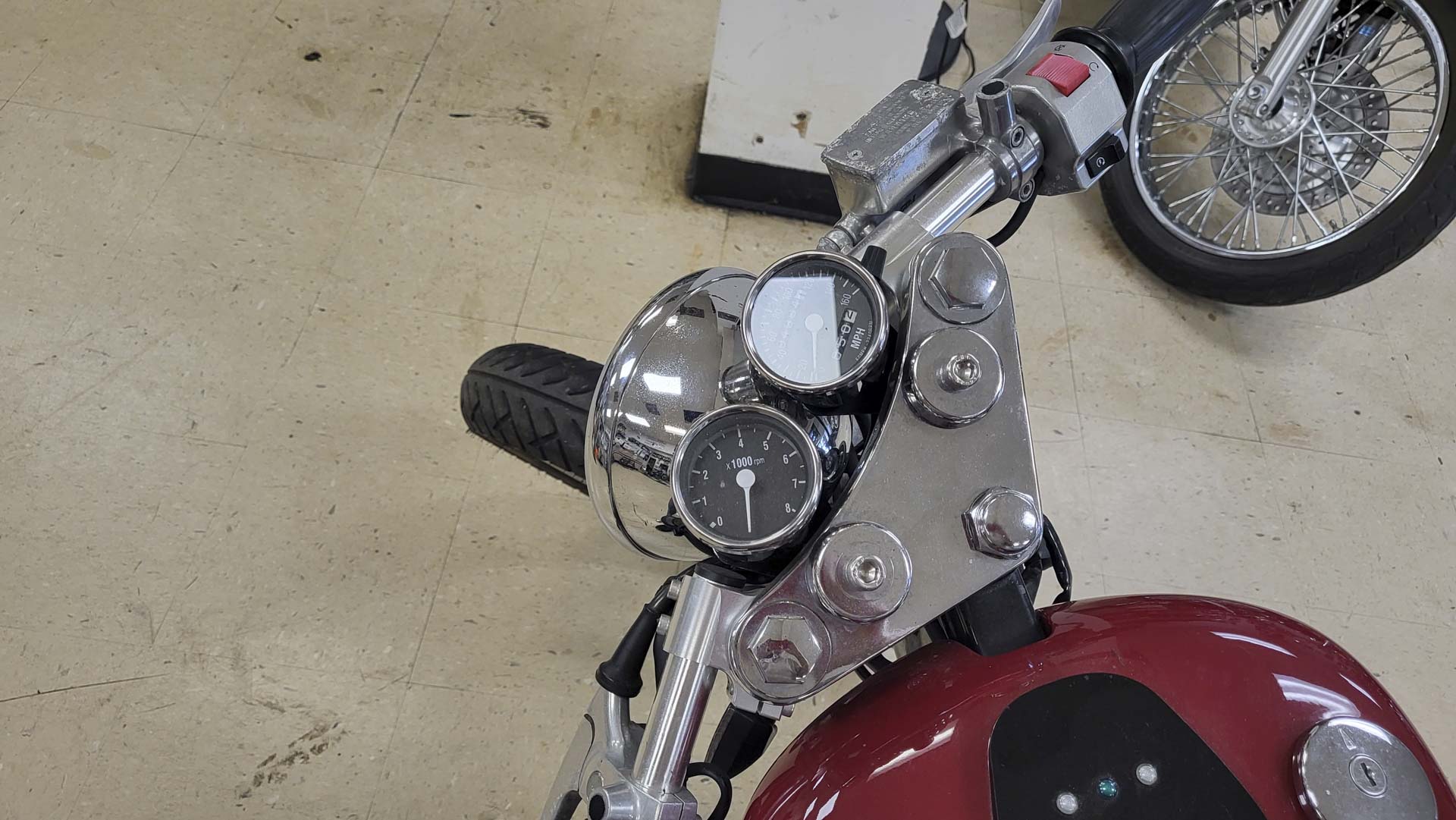
• Handlebars: Low-profile clip-ons or clubman bars mounted directly to the upper triple tree for a forward-leaning stance.
• Foot Controls: Rearset footpegs moved back and upward to complement the aggressive riding position.
• Suspension Changes: Front telescopic forks are usually lowered/stiffened to fix the original raked-out cruiser stance; stock rear twin-shocks are replaced with longer, adjustable units to lift the rear end.
• Wheel/Tire Setup: While stock utilizes a 19-inch front and a wide 15-inch rear, custom builds typically upgrade to matching 18-inch or 17-inch spoked rims to maximize cafe styling and sport-tire availability.